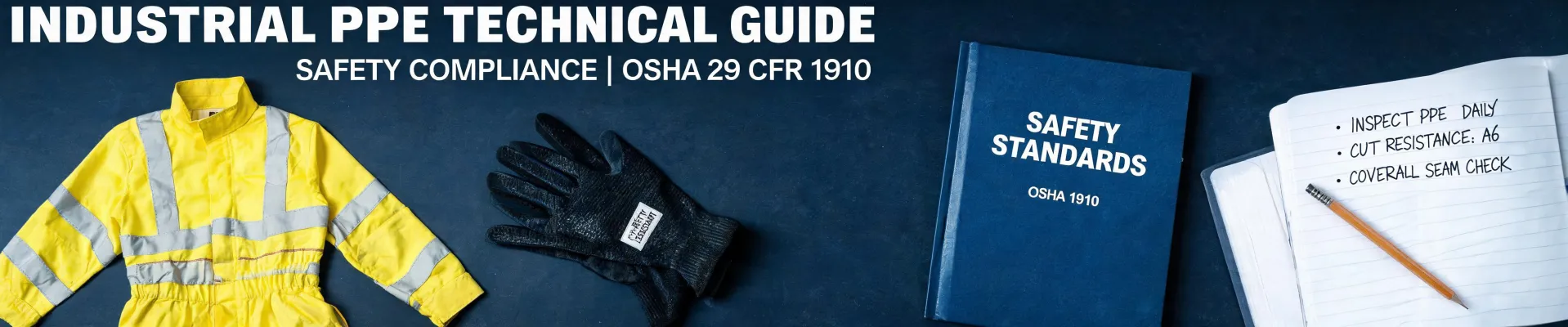
I don't fix pipes. I buy the stuff people wear when they fix pipes.
For the last seven years, I've handled safety supply orders for a Pacific Northwest restoration company. That means coveralls, respirators, gloves, hard hats, and boots for jobs ranging from crawlspace leaks to commercial sewer backups. Quite a few of those calls started as an emergency plumbing repair in DuPont WA. I've also made 11 significant PPE ordering mistakes since 2017, totaling roughly $7,400 in wasted budget. This article is the checklist I wish I had before that first mistake.
Here's where the name gets tricky: DuPont is a place and DuPont is a brand. A new coordinator who searches for 'dupont' could be looking for a plumber near Joint Base Lewis-McChord or a Tyvek coverall with the DuPont brand logo. This article covers both, but the real focus is the comparison I use before I approve any order.
What this comparison is really about
I don't buy all premium PPE, and I don't buy the cheapest item either. The first question is not 'Which brand?' It's 'What happens if this gear fails on the job?'
Budget gear can be perfectly fine when the risk is low. The problem is hidden cost: a missing certification, a seam that splits, a helmet nobody wears. Here is how to use this guide: whenever you place an order, imagine the worst-case scene. A sewer leak, a broken water main, a flooded kitchen. Ask whether the planned gloves, suit, and hard hat can make it through that scene without a second trip.
Coveralls: DuPont brand Tyvek vs budget coveralls
Most of our coverall orders are DuPont brand, and that's not logo worship. DuPont Tyvek is a flashspun polyethylene material that keeps out fine particles and light liquid splash while still letting body heat escape. A budget coverall can be fine for dust, paint, or insulation, but it is a gamble when the water is the reason for the call.
In September 2022, I approved a cheap coverall order for a $3,200 sewer backup cleanup. The suit split near the knee while a technician was kneeling in a contaminated crawlspace. The job stopped. We spent roughly $400 on decontamination and replacement clothing, and we lost most of a day. The suit was $11 and the lesson was expensive.
To be fair, DuPont brand Tyvek has limits too. It is not a fully encapsulated hazmat suit, and it does not protect against concentrated chemicals or heavy liquid exposure. I still check the technical data sheet for the specific model. That is the main advantage of choosing a brand with published performance data: you can verify, not just hope.
Verdict: For wet, dirty emergency work, buy the DuPont brand Tyvek model with test data or an equivalent with clear documentation. For a dry, low-risk job, budget coveralls are acceptable.
Hard hats: Kask hard hat vs the one that never leaves the truck
Hard hat rules are clear: if head protection is required, it has to be worn. ANSI/ISEA Z89.1 sets the impact and penetration baseline, but it does not solve the comfort problem. A $20 hard hat that rides behind the seat of a truck costs more than a comfortable one that stays on someone's head.
That's where the Kask hard hat comes into the conversation. It costs more than a basic dome hard hat, but it also has things like a six-point suspension, a dial fit system, and a lower-profile shell. In my experience, those details separate the hard hats people wear from the hard hats people complain about.
Here's a specific moment: in February 2024, a crew was called to a commercial building after a roof drain failure. The site required hard hats with chinstraps. My old budget helmets had flimsy chin straps, so the crew wore them loose. The foreman stopped the work and asked for proof that our head protection was compliant. That safety delay was the nudge I needed to order Kask hard hats for the regular crew.
Kask is not the only good brand. I still keep budget helmets for visitors. But the money should go to features that improve wear time, not just logos.
Verdict: A Kask hard hat is worth it when your people need head protection on a regular basis. If you need a helmet once a year, a compliant budget hard hat is enough.
Nitrile gloves food safe? Not unless the box says so
People often ask me if nitrile gloves are food safe. The quick answer: some are. Nitrile gloves food safe is not a generic material property. It depends on the ingredients, manufacturing process, and whether the manufacturer can prove it. If the box doesn't say 'food contact' or 'food safe,' treat it as not food safe.
This one cost me in 2021. I ordered 5,000 no-name blue nitrile gloves because they were 30% cheaper than what we used before. A crew later did an emergency plumbing repair in a commercial kitchen. The kitchen manager asked for the food-contact documentation. I called the supplier. They didn't have it. Those gloves ended up being used by painters, and I learned the difference between price and total cost.
According to the FDA (fda.gov), gloves that contact food must be made from substances that are suitable for that use. The practical part: the manufacturer should be able to document it. No documentation means no sale.
The transparent supplier lists food-safe claims before you have to ask. That listing may look more expensive, but it saves you the fees that never show up on an invoice: delays, risk, and awkward calls.
Verdict: For kitchen, food-processing, or food-contact work, buy only nitrile gloves with clear food-safe documentation. For ordinary repairs, any quality nitrile glove is fine, but check thickness before you trust it.
Are leather gloves good for winter? Only when the work is dry
Are leather gloves good for winter? Yes, if your hands stay dry. Leather is durable, wind-resistant, and good for gripping rough materials. It also soaks up water. A wet leather glove becomes heavy, stiff, and cold. That is a terrible combination for a burst pipe call in January.
For emergency plumbing repair in wet conditions, I prefer a waterproof insulated work glove over leather. My standard winter setup combines a thin nitrile liner with an insulated waterproof shell: the liner keeps water and oil off the skin, and the shell keeps the hand warm. Leather gloves stay in the truck for dry tasks like moving debris or handling tools.
This is a both/and decision. You can own leather gloves for winter and still admit they are the wrong tool for wet plumbing work.
Verdict: Leather gloves are good for winter when it is dry and cold. For wet emergency work, use a waterproof insulated glove with a nitrile liner.
The hidden cost lesson
If you've made it this far, here is the real takeaway. The comparisons above are DuPont brand vs budget coveralls, Kask hard hat vs budget helmets, food-safe nitrile gloves vs no-name blue boxes, and leather vs insulated waterproof gloves. The underlying comparison is always the same: visible information vs hidden risk.
A supplier who tells you about fees, certifications, and limitations before purchase is easier to trust than one who only says 'cheapest.' I now ask 'what's not included?' before I ask 'what's the price?' That one question has saved me more money than any rush-fee discount.
If I can't see proof of a safety claim, I don't buy the claim. I buy something with evidence.
This was accurate as of early 2025. PPE standards and product lines change faster than you'd expect, so verify current specs and prices before placing your next order.

Discuss this specification topic
Use the contact form if your team needs a standards crosswalk, datasheet request, or PPE program review related to this article.
Request Follow-Up