ANSI cut A1-A9 versus EN 388 B-F
How to compare cut language without treating different test systems as identical.
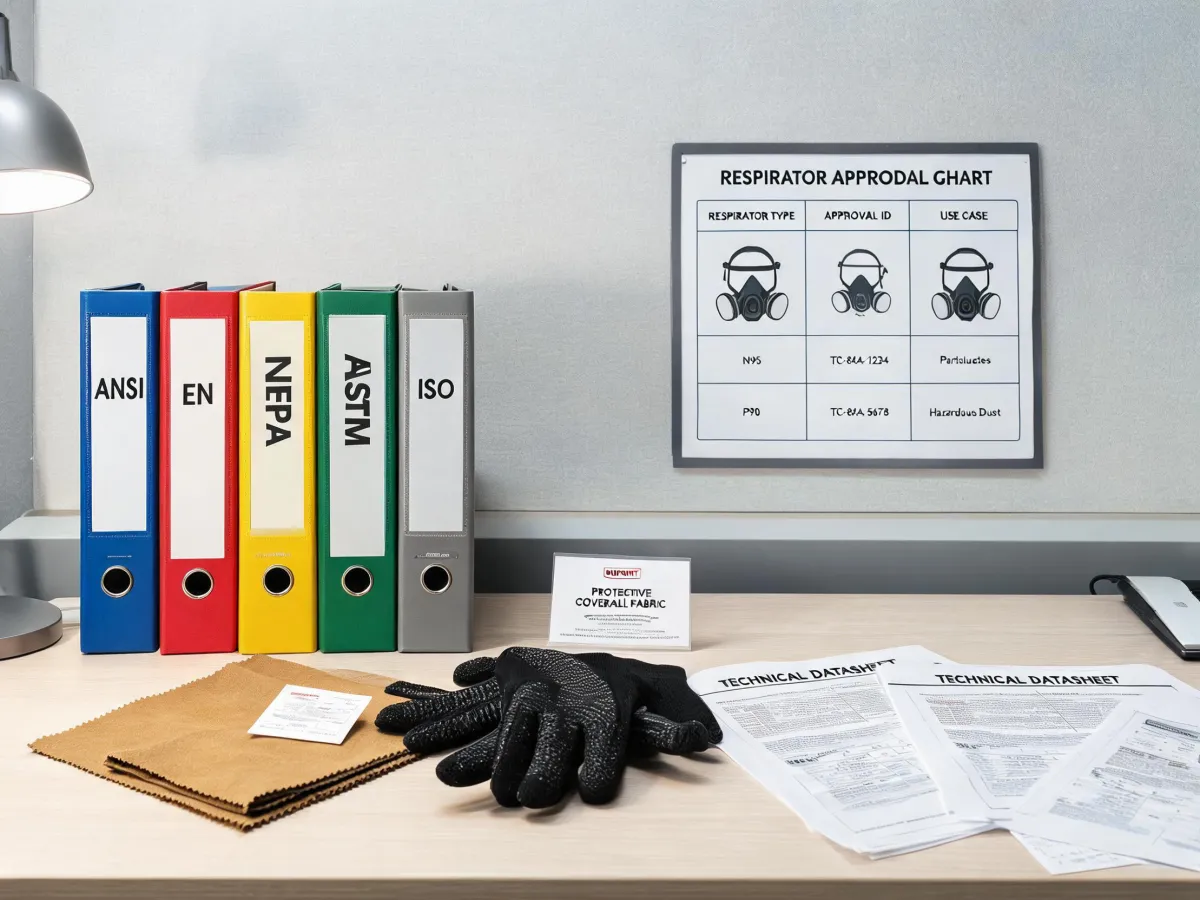
This index is written for engineering and EHS review. It does not claim that a product is approved by OSHA. OSHA references are workplace compliance references; product approvals and test reports must be checked through the relevant agency, notified body, laboratory, or manufacturer documentation.
| Standard family | PPE type | What buyers should verify | Documentation request |
|---|---|---|---|
| ANSI/ISEA 105 | Hand and arm protection | Cut level A1-A9, puncture, abrasion, and heat markings relevant to the task. | Glove datasheet and test method summary. |
| EN 388 | Mechanical gloves | Cut B-F, abrasion, tear, puncture, and impact markings where applicable. | EU declaration or test report reference. |
| NFPA 2112 | FR workwear | Garment scope, fabric performance, and whether the task requires FR apparel. | Garment certificate and care instructions. |
| ASTM F2413 | Safety footwear | I/75, C/75, EH, Mt, PR, or SR markings depending on the workplace. | Footwear specification sheet. |
| ANSI Z308.1-2021 | First aid kits | Class A or B contents and station placement for the workforce size. | Kit inventory and replenishment procedure. |
How to compare cut language without treating different test systems as identical.
Task duration, contamination, garment integrity, and disposal assumptions for coverall programs.
How approval language, fit testing, and workplace procedure requirements interact.
Where garment labels, hazard analysis, and NFPA 70E program requirements should be separated.
ANSI Z308.1 Class A/B planning for maintenance areas, laboratories, and remote work zones.
How to write environmental notes with scope, boundary, and verification questions visible.
Barrier, seam, sizing, storage, comfort, and use limitation notes for protective clothing programs.
Cut, abrasion, grip, coating, chemical compatibility, and dexterity considerations.
Kit class, station placement, worker count, replenishment procedures, and site-specific response assumptions.
Approval, compliance, and certification words should not be used interchangeably. The library helps teams record which document supports which claim, whether it is a product test report, a workplace program reference, a facility management certificate, or a distributor document.
No. They can be discussed side by side, but each test system should be described with its own method and markings.
No. OSHA references workplace compliance expectations. Product documentation should come from the applicable manufacturer, laboratory, agency, or notified body.
Product categories, sample quantities, datasheet requests, packaging preferences, delivery constraints, and the standards notes that shaped the request.
Attach the product category, task, hazard, and document gap. The response can help your team request datasheets, test reports, sample quantities, and distributor follow-up with more precision.