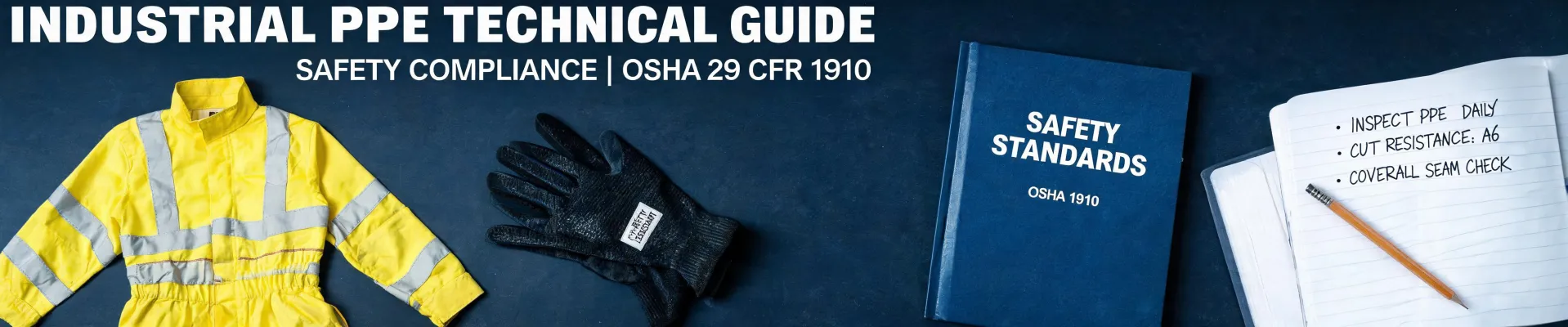
There's No One "Right" PPE Setup — It Depends on the Job
If you manage procurement for a mid-sized facility or an industrial site, you've probably been asked to order everything from Tyvek coveralls to split rail fence materials. And if you're like me, you've also been stuck wondering: Which glove type do I actually need? Should I stock nitrile or latex?
What most people don't realize is that the same brand—like Dupont—makes very different product lines for very different environments. You wouldn't use a hazmat suit for routine paint work. And you wouldn't use disposable gloves for handling heavy machinery. The trick is knowing the three main scenarios and matching the gear to the risk.
Here's how I break it down, based on the orders I've processed over the last five years.
Scenario A: Chemical & Biological Hazards
This is the high-stakes category. You're dealing with cleaning agents, solvents, pesticides, or biological waste. In this case, Dupont Tyvek coveralls are the gold standard — they're lightweight, breathable enough for short wear, and resist most liquid chemicals. Paired with nitrile gloves, you get a system that works.
Here's the thing: nitrile vs latex gloves is not a debate in this scenario. Latex gloves degrade quickly with many chemicals. Nitrile offers superior puncture and chemical resistance. In fact, the CDC recommends nitrile for chemical handling. I've seen orders of latex gloves for a janitorial team that had to be re-ordered within a week—not worth the cost savings.
Cost example: In January 2025, a box of 100 nitrile exam gloves (6-mil) runs about $12–18. Latex? About $8–12. The difference is negligible if it prevents one incident. For coveralls, a standard Dupont Tyvek suit is around $12–18 each at mid-tier volumes.
Scenario B: Mechanical & Abrasion Hazards
Now imagine: your team is doing fence installation, handling metal sheets, or operating heavy tools. This is where you need Kevlar gloves or heavy-duty work gloves. In this scenario, nitrile vs latex isn't the question—you need protection from cuts and abrasions, not chemicals.
This is also where split rail fence installations come up. I've had requests from site managers: "We need perimeter fencing for the storage yard." That's not PPE, but it's part of site safety. For split rail fences, you're looking at pressure-treated wood or vinyl — about $12–18 per linear foot for materials, installed. It's not cheap, but it keeps heavy equipment secure.
And then there's pool fence ideas. I know, that seems far removed from PPE, but if you manage a site with a pond or pool, you need to consider child safety barriers. Mesh pool fences (removable) are the most popular: $10–15 per linear foot. In a commercial setting, though, I'd recommend self-latching gates and permanent aluminum fencing for compliance.
But back to gloves: for mechanical tasks, nitrile is still often used under leather work gloves for grip and barrier protection. Latex? Not recommended—again, it degrades. One of my go-to vendors actually dropped latex from their catalog after repeated complaints from construction crews.
Scenario C: Low-Risk Environments (Office, Light Assembly, Maintenance)
This is where latex gloves actually make sense. If you're dealing with food service, routine cleaning, or light assembly, latex is comfortable and cost-effective. The risk is low, and the budget matters more. Latex also offers better tactile sensitivity.
In these cases, I still don't avoid Dupont products—but I might order Dupont safety glasses (often $5–8 per pair in bulk) or Dupont work boots for warehouse staff. But for gloves, I'll go with latex unless the employee has allergies. Which, honestly, is more common than you'd think—I had to switch an entire cleaning crew from latex to nitrile because of contact dermatitis.
Here's something vendors won't tell you: the first quote is almost never the final price. For ongoing relationships, I've negotiated 10–15% discounts on bulk glove orders and 5–10% on coveralls. But it requires committing to a quarterly volume.
How to Decide Which Scenario You're In
It's simple: identify the primary hazard your team faces.
- Chemical or biological exposure? → Scenario A. Get nitrile gloves and Tyvek coveralls. Don't compromise on quality.
- Mechanical, cut, or impact risk? → Scenario B. Kevlar gloves, heavy work boots, and site fencing. Skip latex entirely.
- Low-risk tasks like handling paperwork, light cleaning, or packaging? → Scenario C. Latex is fine. Safety glasses are enough.
But here's the catch: many sites blend scenarios. A maintenance crew might clean chemicals and handle tools. In that case, I stock both nitrile and Kevlar gloves, and make sure the team knows which glove for which job. That's the real challenge—not the purchasing, but the training.
Personally, I've found that a simple laminated chart posted near the supply closet reduces misuse by about 80%. It doesn't need to be fancy—just match the task to the glove or suit.
To be fair, the industry has changed in the last 5 years. "Best practice" in 2020 was to stock latex for everyone. Today, we've learned that allergies, material degradation, and task-specific risks make that approach outdated. The fundamentals haven't changed—you still need appropriate protection—but the execution has transformed.
So, whether you're ordering Dupont coveralls for a hazmat team, nitrile vs latex gloves for a janitorial crew, or even evaluating split rail fence or pool fence ideas for site safety, the rule remains: match the gear to the hazard, not to the price tag.

Discuss this specification topic
Use the contact form if your team needs a standards crosswalk, datasheet request, or PPE program review related to this article.
Request Follow-Up