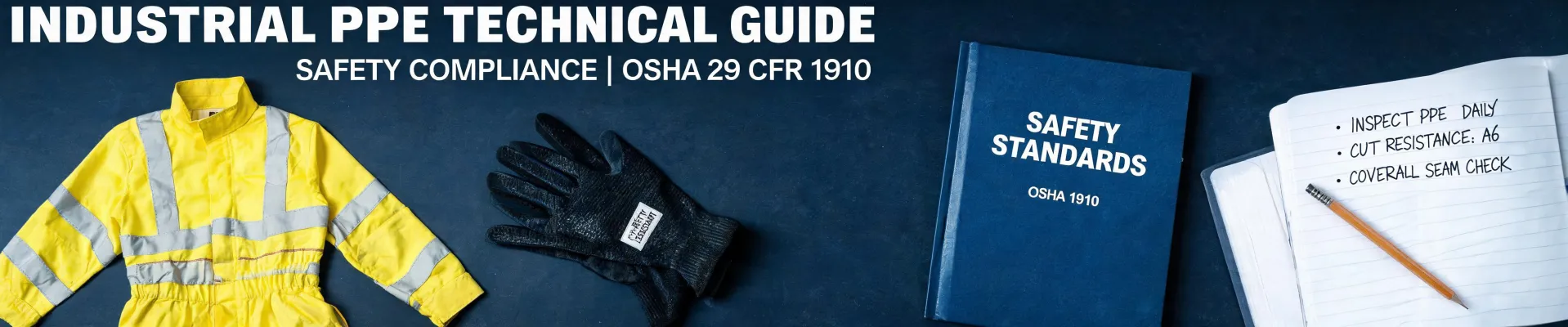
When I took over purchasing in 2020, I thought safety supplies were a boring catalog exercise. I was wrong. Five years later, I manage roughly $45,000 a year in PPE ordering, 60-80 purchase orders, and a mental list of small decisions that turned into expensive lessons. This article is a buyer's comparison, not a safety lecture. I'm comparing the premium option against the budget option on four things I've actually had to order: DuPont Tyvek protective clothing, safety glasses, fire extinguisher inspection, and roof safety harnesses.
Why compare? Because in safety equipment, the cheapest option can be a trap. Here's the framework I use: weigh the cost of the item, the cost of a failure, and the effort required to verify compliance. That's it. If a product can't show me a standard or a spec sheet, it doesn't get the order.
The first comparison: DuPont Tyvek vs. budget coveralls
I've ordered both. The budget coveralls looked almost identical in the product listing and cost about 40% less. The spreadsheet said buy the budget case. My gut said something was off: the spec sheet was thin, and there was no seam construction data. I went with the spreadsheet anyway. That is one of my biggest purchasing regrets.
We sent a crew out for a fine dust cleanup. The first suit snagged on a door handle and tore at the wrist. Another rip appeared near a zipper when a technician bent over. We used the whole case in a week instead of a month, and a few workers ended up covered in dust. The so-called savings disappeared.
The budget case was $1,850 cheaper than the Tyvek order. The replacement order with expedited shipping cost us $4,200. That is the most expensive 'discount' I've ever ordered.
After that mess, I started at the DuPont official homepage and pulled the actual documentation. The difference wasn't the logo; it was the material science. DuPont Tyvek protective clothing has a known particulate barrier, controlled seam construction, and traceability data. The budget coveralls had none of that listed. They were not a lower-priced version of the same thing. They were a different category.
Three things I compare on coveralls now: barrier rating, seam style, and documentation. The Tyvek product had all three. The budget product had none.
Conclusion: For hazardous dust, light liquid splash, or any job where exposure is a real risk, choose DuPont Tyvek protective clothing. For water-based painting where the only risk is paint on clothes, budget coveralls are fine as disposable clothing. Just don't call them PPE.
Safety glasses: the conclusion that surprises people
This is the comparison where price matters least. In our 2024 vendor consolidation project, I tested seven pairs of safety glasses for the team. The most expensive pair looked great but wasn't marked with an impact rating. The cheapest pair carried the ANSI Z87+ mark. Guess which pair I bought? The cheap one, because the mark is the whole point.
According to ANSI/ISEA Z87.1-2020, safety glasses must pass impact tests. High-impact lenses and frames get the Z87+ mark. If that marking is missing, the manufacturer isn't telling you whether the glasses meet the standard, and price alone won't tell you either.
After ordering the $10 pair, I kept second-guessing whether they would survive real use. They did. The team liked them, and the $50 pair went back. The best part: no one complained about the cheaper pair once they realized they were not heavier or less comfortable.
Conclusion: Buy safety glasses by looking for Z87+ on the frame or lens. Include prescription safety glasses in the same rule. A pair with Z87+ is safer than a pair without, no matter which one costs more.
Fire extinguisher inspection: local pro vs. 'we'll get to it'
This one isn't really product A vs. product B. It's the difference between a scheduled professional inspection and the vague plan to check the gauges sometime. I learned this in 2023. We were slammed, and I almost postponed the annual extinguisher service. Instead, I searched 'fire extinguisher inspection near me' and picked a licensed company with good reviews.
The technician found an extinguisher on the second floor with a cracked hose. On the wall, it looked fine. In a fire, it would not have worked. The inspection cost $225. The cost of finding out during an emergency doesn't bear thinking about.
OSHA's portable extinguisher rules under 29 CFR 1910.157 put the maintenance responsibility on the employer. Monthly visual checks, annual maintenance, and proper records are the minimum. As of January 2025, my local inspector charged $225 for a building of our size and sent a signed report with photos. That report made the finance team happy and made me sleep better.
Five minutes of verification beats five days of correction.
Conclusion: If you don't have a fire safety vendor, search 'fire extinguisher inspection near me' before the inspection is overdue. A licensed inspection is cheap insurance. Skipping it is a gamble.
Safety harness on a roof: buying vs. knowing how to use it
In 2022, I bought a high-quality harness for our maintenance team. I felt accomplished. Then I watched one of the technicians put it on with the chest strap loose and the rear D-ring down at his waist. If he had fallen, he would not have been protected; he'd have been thrown out of the harness.
I stopped the job and looked up 'how to use safety harness on roof' before anyone went back up. What I learned: the D-ring goes between the shoulder blades, the leg straps have to be snug, and the lanyard must connect to an anchor that is strong enough and positioned to limit free fall. The lanyard also has to be short enough to stop the worker from hitting the ground or an obstruction. Under OSHA's construction fall protection rules, 29 CFR 1926.501, workers need fall protection at six feet. A harness only helps if it is fitted, anchored, and inspected.
We now do a three-minute harness inspection before any roof work. It catches damaged webbing, bent buckles, and loose straps. I also tell anyone responsible for roof work to verify the anchor point is engineered for a fall load, not just a convenient pipe.
Conclusion: A harness is not a lucky charm. Buying the most expensive one doesn't matter if nobody knows how to use it. Spend time on training and pre-use checks. That is the cheapest part of a fall protection system and the one people skip most.
So what should you buy?
If your workers are exposed to hazardous dust or splashes, buy DuPont Tyvek protective clothing with a verifiable spec sheet. Budget coveralls are not a substitute unless an exposure assessment says they are acceptable.
If you need safety glasses, look for the Z87+ mark. Ignore the price for a second and read the label.
If you manage a building with fire extinguishers, schedule a certified inspection and keep the records. Need a vendor? Search 'fire extinguisher inspection near me'.
If anyone works on a roof, train them, fit them, and inspect the harness before every use. The search phrase is 'how to use safety harness on roof', but the real solution is a habit, not a video.
The pattern is always the same: prevention over correction. I still check the DuPont official homepage before large PPE orders because the online specs make my compliance paperwork easier. Prices change; as of January 2025, the quotes I received varied by vendor, so verify current rates before you budget. The safety standard doesn't change: if you can't verify it, don't rely on it.

Discuss this specification topic
Use the contact form if your team needs a standards crosswalk, datasheet request, or PPE program review related to this article.
Request Follow-Up