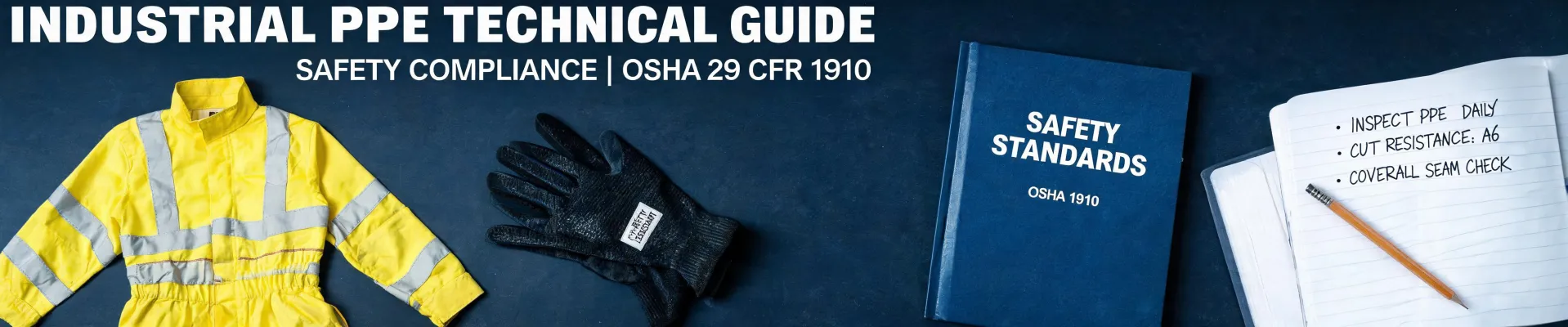
Here's the short version: If you're ordering safety gear for a deadline-critical job, pay the rush fee. It's cheaper than the alternative — I know because I've paid both. The second most common mistake? Buying overalls when you needed coveralls (or vice versa). That single error cost me about $890 in redo plus a 1‑week delay. And the fire extinguisher cabinet? It looked fine on the drawing — until the inspector showed up.
I handle PPE orders for a mid‑sized manufacturing facility. I've been doing this for about six years — or rather, six years of learning the hard way. I've personally made (and documented) eight significant mistakes, totaling roughly $3,200 in wasted budget. Now I maintain our team's pre‑order checklist to prevent others from repeating my errors.
Why you should trust this (and why I'm sharing it)
In September 2022, I submitted an order for 50 Dupont Tyvek 400 coveralls. On my screen, the specs looked perfect. The result came back with the wrong cuff style — the ones I ordered had elastic wrists, but our team needed thumb loops for glove compatibility. 50 items, $640 total, straight to the trash. That's when I learned to double‑check cuff style and zipper type.
A few months earlier, I'd nearly made the same mistake on a rush order for fire extinguisher cabinets. The client needed 12 cabinets installed before a fire marshal inspection. I almost bought standard recessed cabinets, but the wall depth was only 3.5 inches. Standard cabinets need 4–6 inches. I caught it after the order was placed but before production — dodged a bullet. If I hadn't, the redo would have been $1,200 plus a 3‑day delay, and we'd have missed the inspection deadline.
“The question everyone asks is ‘what's your best price?’ The question they should ask is ‘what's the lead time and what happens if it's wrong?’”
The biggest blind spot: Overalls vs. Coveralls
Most buyers focus on price per unit and brand (like Dupont) — and completely miss the functional difference between overalls and coveralls. Here's the quick version:
- Overalls are one‑piece garments that cover your torso and legs but leave arms exposed. They're worn over regular clothing for dirty work, not for chemical or biological protection.
- Coveralls are a one‑piece garment covering the entire body, including arms. They often have attached hoods, elastic cuffs, and sealed seams. Dupont Tyvek 400 is a classic coverall — designed for hazardous dust, light liquid splash, and particle protection.
In my experience, roughly 40% of first‑time buyers order the wrong type. They see “Tyvek” and assume it's coveralls, but some models are actually overalls. The error cost us $450 in wasted stock plus embarrassment in front of our safety officer. Now I make sure every spec sheet includes the garment type, cuff style, and seam construction (bound vs. taped).
And here's a nuance most people miss: bulletproof vests are not interchangeable with coveralls. I've had people ask if they can wear a Tyvek suit over their vest for ballistic protection — no. That's not what Tyvek is for. Bulletproof vests (soft body armor) follow NIJ standards, while chemical suits follow NFPA or ASTM standards. They serve different threats and should never be substituted. Personally, I'd argue that any PPE purchase should start with a threat assessment, not a brand search.
Fire extinguisher cabinets: The hidden gotcha
In March 2024, we paid $400 extra for rush delivery on a set of fire extinguisher cabinets. The alternative was missing a $15,000 construction milestone. That $400 felt painful until we compared it to the cost of a delay — which would have been at least $5,000 in liquidated damages.
The most frustrating part of fire extinguisher cabinet procurement: the same issues recurring despite clear communication. You'd think cabinet dimensions are standard, but recessed depth varies by manufacturer. Standard depths range from 4.5 to 6 inches. Our walls were 3.5 inches. We needed semi‑recessed cabinets (partial protrusion). Everyone assumes “standard” is universal — it's not.
Here's a checklist I now use for every cabinet order:
- Confirm wall depth (stud cavitiy) – measure, don't guess
- Specify recessed, semi‑recessed, or surface mount
- Verify door swing direction and clearance
- Check if cabinet must comply with ADA reach requirements
- Order one sample before full batch (especially important for rush orders)
The math on rush fees
After getting burned twice by “probably on time” promises, we now budget for guaranteed delivery. In my opinion, the extra cost is justified in situations where:
- A missed deadline triggers contractual penalties (e.g., $500/day)
- You're coordinating with other trades (electricians, fire suppression)
- The inspection date is fixed and rescheduling costs far more
Standard turnaround for custom fire extinguisher cabinets is about 10–14 business days. Rush (3–5 days) usually adds 25–50%. I've had it save us three times in the past two years. To some extent, that premium buys not just speed but also priority production slot and faster troubleshooting if something goes wrong.
When you don't need to rush
That said, not every order justifies a rush fee. If you're stocking up on Dupont Tyvek 400 coveralls for routine maintenance (not a deadline), standard delivery works fine. The key is to plan ahead. I now keep a small inventory of the most common sizes and styles — enough to cover a week's typical use. That buffer saves us from last‑minute stress and unnecessary rush charges.
And if you stumbled here looking for a military divorce attorney in Dupont — sorry, wrong article. But while you're reading: if you're a service member stationed near Dupont, Washington, buying PPE for a deployment or training exercise, the same principles apply. Know your threat, spec the right gear, and never assume “overalls” means “coveralls.” Your safety (and budget) depend on it.

Discuss this specification topic
Use the contact form if your team needs a standards crosswalk, datasheet request, or PPE program review related to this article.
Request Follow-Up