I've handled purchasing for a 40-person engineering firm for the last five years—roughly $60,000 in annual spend spread across 8 vendors. I manage everything from office supplies and PPE to cleaning products and the occasional personal request from an employee who trusts me more than their own search results. (One engineer once asked for help picking a pet safe wireless fence for his dog. That really happened.)
For the first two years, I treated every order the same way: compare prices, confirm delivery dates, hit submit. Then a bad PPE order turned into $400 of rework, and I realized the real skill isn't placing orders—it's knowing which details need verification for each type of purchase. I report to both operations and finance, so I feel the tension between speed and paperwork daily. That tension is probably why I ended up building a framework instead of just keeping a mental list.
I sorted everything into four scenarios:
- Certification-bound purchases — things like a Dupont Tyvek coverall, where a safety standard decides everything.
- Compatibility-bound purchases — consumables like Dupont water filter cartridges that have to fit an existing system.
- Out-of-scope requests — personal or lifestyle items that find their way to the office anyway, from pet fences to discount code questions.
- Fix-it-or-replace-it decisions — the "can you show me how to..." questions, like how to stretch leather gloves.
Scenario 1: Certification-Bound Purchases
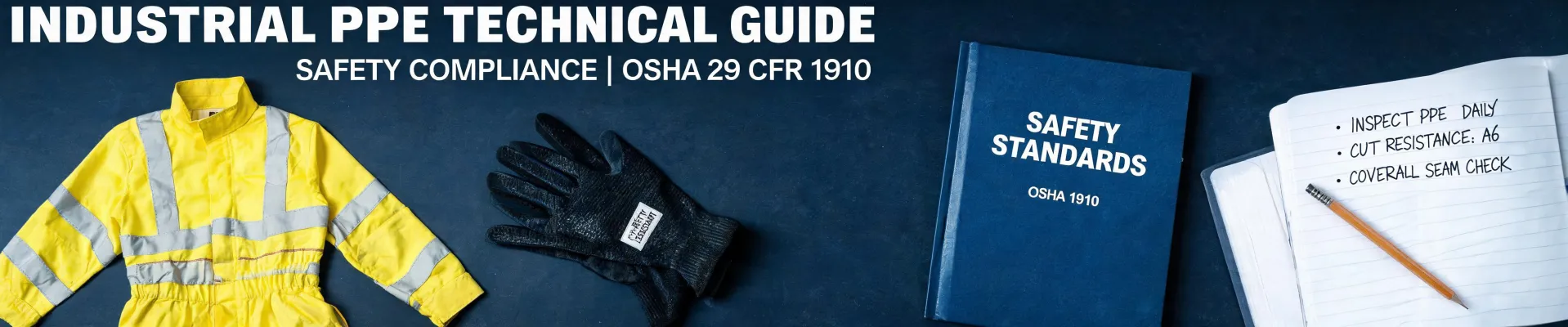
If you're ordering something like a Dupont Tyvek coverall, the first question isn't which brand to buy. It's what the task demands you protect against. Tyvek's flash-spun olefin fabric handles particles and light liquid splash well, but the models are not interchangeable: Tyvek 400, 600 Plus, and the chemical-rated suits are different tools with different certification profiles. I've seen procurement teams assume "Tyvek" means one thing across models, and that's how you end up with suits that work for paint jobs but fail for asbestos work.
Here's what I verify now:
- The applicable standard. EN 13034 covers limited chemical protection; EN 1073-2 covers radioactive particulate; ANSI/ISEA 101 covers disposable PPE. If the spec sheet doesn't cite one, that's my first red flag.
- Seam construction. Serged and taped seams provide different levels of barrier integrity. For our asbestos-related work, taped seams are non-negotiable.
- Sizing. A suit that doesn't fit is a liability, not a savings. I keep a chest/height matrix for the field staff and check it against the manufacturer's dimension table on every order.
I once saved $80 by ordering a non-certified multi-pack of coveralls from a budget supplier. They looked and felt identical to the certified ones, which was exactly the problem. The seam strength test report came back awful, and a technician tore a sleeve during a clearance inspection. The job had to be redone—$400 of wasted labor, plus a facilities manager who made it crystal clear that my "savings" weren't appreciated.
I'm not a chemist, so I can't speak to barrier performance at the molecular level. What I can tell you from a procurement perspective is that certification isn't paperwork. It's the difference between a product you can defend in a safety meeting and one that gets someone hurt.
Scenario 2: Compatibility-Bound Purchases
The tricky part with consumables isn't finding them—it's confirming they'll actually fit what you already own. I learned this one the hard way with Dupont water filter cartridges.
Our breakroom uses a carbon block filter housing. In late 2024, I said "standard size" to the distributor. They heard "the model we sold you last time." Result: a case of cartridges that didn't fit. We were using the same words but meaning different things. The O-ring diameter was off by 2mm—not enough to leak immediately, but enough to start weeping water into the cabinet after a month. We replaced the whole batch, paid expedited shipping on the correct ones, and I lost a few hours explaining to finance why the budget line was off.
Now I check three things before ordering any replacement filter:
- The exact model number on the existing cartridge, not the brand family. Two filters can look identical and have different O-ring dimensions.
- NSF/ANSI certification—42 for aesthetic claims, 53 for health effects, 58 for reverse osmosis systems. If a filter makes a performance claim and can't back it up, I won't order it.
- The replacement interval. Carbon block filters have a real service life. Writing "change every 6 months" on the breakroom calendar isn't a suggestion.
It's tempting to think you can just match the brand and the physical size. The "same brand, same fit" advice ignores the fact that manufacturers revise housings and cartridges without changing the brand name. The SKU is the only thing that matters.
Scenario 3: Out-of-Scope Requests
This category doesn't sound like it belongs in a purchasing guide, but if you're the person who orders things for an office, you know exactly what I mean. The engineer who wants help choosing a pet safe wireless fence for his new puppy. The designer who asks if I've seen a valid loop earplugs discount code. These conversations aren't in my job description, but they take two minutes, and they build goodwill.
For the pet safe wireless fence, I didn't recommend a specific product right away. I pointed him to a guide on collar fit and boundary calibration instead. A wireless containment system is only as reliable as its setup—most negative reviews for those fences trace back to people skipping the calibration step, not to the hardware failing. He came back a week later with the fence installed and working, and thanked me for saving him from buying the wrong thing.
For the loop earplugs discount code, the lesson is broader than earplugs. A 25% off code that expires in 72 hours, excludes the popular SKUs, and only applies to new customers isn't a deal—it's a lead generator. I now spend three minutes checking expiry date, exclusions, and whether the code stacks with bulk pricing. That three-minute check has saved me from paying a higher effective price than the regular rate more than once.
The other rule for this category: know when to say "this is personal." I'm glad to help an employee evaluate options, but the transaction happens outside our work accounts. Finance stays happy, and there's no awkward conversation about whether a dog fence belongs on the company card.
Scenario 4: Fix-It-or-Replace-It Decisions
Sometimes the request isn't a purchase at all. A colleague came to me with a pair of stiff work gloves and asked how to stretch leather gloves so they'd fit more comfortably.
If the leather is good quality, you can usually do it:
- Apply leather conditioner, wear the gloves while they're still damp, and let body heat do the shaping. This is the most reliable method.
- Use a stretching spray made for leather and wear them for an hour or two.
- Stuff them with slightly damp newspaper and let them air dry. Direct heat will shrink and stiffen the leather, not loosen it.
But I made him check the lining first. If the lining is cracked or the seams are starting to fail, stretching just extends the life of a product that's already dying. That's the same logic I apply to every repair-versus-replace question.
Five minutes of inspection beats five days of correction.
A good pair of gloves that lasts another season after a quick conditioning is a win. A failing pair that falls apart after you stretched it was never going to make it anyway. The cheapest option is the one you shouldn't have bought in the first place.
How to Tell Which Scenario You're In
When a request lands on your desk, the category isn't always obvious. Here's the mental filter I run:
- Is there a safety standard involved? If it protects someone from physical harm, it's Scenario 1. Certification beats price, every single time.
- Does it connect to an existing system? If it fits into a housing, bracket, or assembly you already own, it's Scenario 2. Find the exact SKU before you look at the price.
- Is it personal, promotional, or a one-off favor? Scenario 3. Help if you can, verify the details, and keep the transaction on the right side of your purchasing policy.
- Is the question about repairing or maintaining something? Scenario 4. Inspect first, then decide whether the fix is worth the effort.
The most expensive mistakes I've made in five years weren't the ones where I overpaid. They were the ones where I under-verified. The $80 "savings" that became $400 of rework. The 2mm O-ring mismatch that forced a full replacement order. The promo code that looked like a deal until I read the terms at checkout.
As of early 2025, this framework has survived budget cuts, two vendor consolidations, and a facilities manager who once told me my job is 90% paperwork and 10% sanity. She's not wrong.
So here's my actual universal buying checklist: figure out which scenario you're in, verify the one detail that makes or breaks the purchase, and then—only then—worry about getting the best price. It's not the most exciting purchasing philosophy, but it's kept me out of trouble for the last three years.

Discuss this specification topic
Use the contact form if your team needs a standards crosswalk, datasheet request, or PPE program review related to this article.
Request Follow-Up