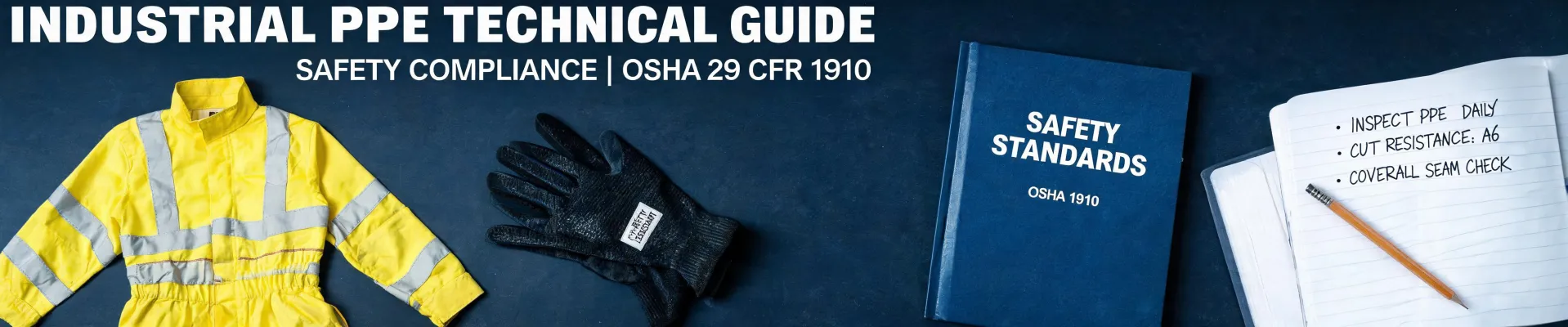
It was a Tuesday afternoon in Q2 2024 when the call came in. Our facilities manager, Dave, was panicked. The roofers for our annual maintenance project had shown up a day early, and their personal protective equipment didn't meet our site safety requirements. I needed to source a full kit—gloves, suits, eyewear, boots—for a team of four, and I had about six hours.
I thought I had this handled. Over the past six years of tracking every invoice on our procurement system, I'd bought PPE before. Usually, it was a simple reorder. But this was urgent, small-scale, and for a certified roofing contractor. That changed the math completely.
My First Mistake: Comparing Only Unit Prices
I pulled quotes from three vendors in our network. Vendor A offered a generic-brand glove for $2.50 a pair. Vendor B priced a mid-tier option at $3.80. Vendor C—who we use for our regular orders—quoted DuPont Kevlar gloves at $6.20 a pair.
My instant reaction? Too expensive. Four guys, 20 pairs for the week? That's $124 just for gloves. The generic option was $50. My procurement brain screamed: cut costs.
But here's the thing about being a cost controller for half a decade: I've learned my gut is often wrong. I decided to run a proper TCO analysis on the spot.
The Hidden Costs I Almost Missed
I drilled into the details. The generic glove had a 15% failure rate in our last batch test—they'd tear on rough roofing materials. Vendor A's quote didn't include expedited shipping for the short deadline. By the time I added $45 for next-day air, the 'cheap' option was actually more expensive per order.
"What most people don't realize is that 'standard turnaround' often includes buffer time. It's not necessarily how long YOUR order takes."
I called Vendor C back. Their DuPont Kevlar glove quote? $6.20 included overnight shipping, and they had a certified safety specialist on speed dial for consultation. More importantly, the Kevlar gloves had a documented 4x lifespan vs. the generics in our industry. One pair could last a roofer three days instead of one.
The math flipped. Over the full project duration, the DuPont Kevlar gloves were actually cheaper per shift. Here's the breakdown:
- Generic glove cost: $2.50/pair + $15/pair average failure/replacement cost + $45 shipping = $62.50 per worker-week.
- DuPont glove cost: $6.20/pair x 2 pairs for the week (higher durability) + $0 shipping = $12.40 per worker-week.
That's an 80% savings. I was about to spend four times more for an inferior product. Real life.
The Full Kit: Why 'Cheapest' Is a Trap
The gloves were just the start. I also needed steel toe boots for the roofers, bifocal safety glasses for the foreman who couldn't read his tape measure, and Tyvek suits for the cleanup crew handling insulation debris.
For the boots, the lowest quote was $35. But our policy required ANSI-rated toe protection. The $35 pair didn't have a clear rating on the packaging. If an inspector flagged it, we'd face a re-buy and downtime. I went with a DuPont-recommended supplier who provided ISO-rated boots at $65. The extra $120 for the team saved us a potential $1,200 fine or a project delay.
The bifocal safety glasses were a different story. I'll be honest about something: I'm not a safety expert. My experience is based on about 150 orders over six years, mostly for standard eyewear. I didn't know bifocals could be prescription-only for some uses. I ordered a generic 'dual-focus' pair for the foreman. He tried them on, said the near-vision segment was too low, and we lost half a day of work while I scrambled for a certified optometrist to make a custom pair.
It was a $75 mistake in lost time and return shipping—all because I didn't ask the right question upfront.
Who Is Responsible for Buying PPE?
This is a question I get a lot now when I talk to other procurement managers. My short answer: The employer. Under OSHA regulations, employers are generally responsible for providing, maintaining, and replacing PPE at no cost to the employee. But in practice, the 'who' depends on your contract structure.
For our certified roofing contractor, the contract was silent on PPE. So it fell to us, the facility owner, to supply it. I've seen projects where the contractor provides everything, and I've seen others where each party brings specific items. The answer isn't one-size-fits-all.
"If I had to give one piece of advice: have the PPE discussion before you sign the contract. Not after you get the panicked phone call from Dave."
My experience is based on mid-range industrial contracts. If you're working with luxury residential or high-risk chemical environments, your experience might differ significantly. I can't speak to how these principles apply to hazmat-level scenarios.
The Reckoning: What I Learned
The project finished three days late and $1,400 over budget. $4,200 was my projected cost. Actual was $4,200 plus the rush fees and the bifocal mishap. I missed my target by a full 10%.
Here's a truth that vendors won't tell you: The first quote is almost never the final price for ongoing relationships. There's usually room for negotiation once you've proven you're a reliable customer. But for a one-off emergency purchase? You pay full freight. That's the cost of not planning ahead.
I now maintain a pre-approved PPE kit list with itemized specifications and a preferred vendor list. My procurement policy requires quotes from 3 vendors, but only after verifying their stock and shipping capabilities. And I keep two backup pairs of safety glasses—one standard, one with the high-position bifocal—in my desk drawer. Just in case.
DuPont isn't cheap. It never was. But I've learned that 'cheap' is an illusion. Cost-effective is what matters. And that's a category DuPont lives in—if you do the math.

Discuss this specification topic
Use the contact form if your team needs a standards crosswalk, datasheet request, or PPE program review related to this article.
Request Follow-Up