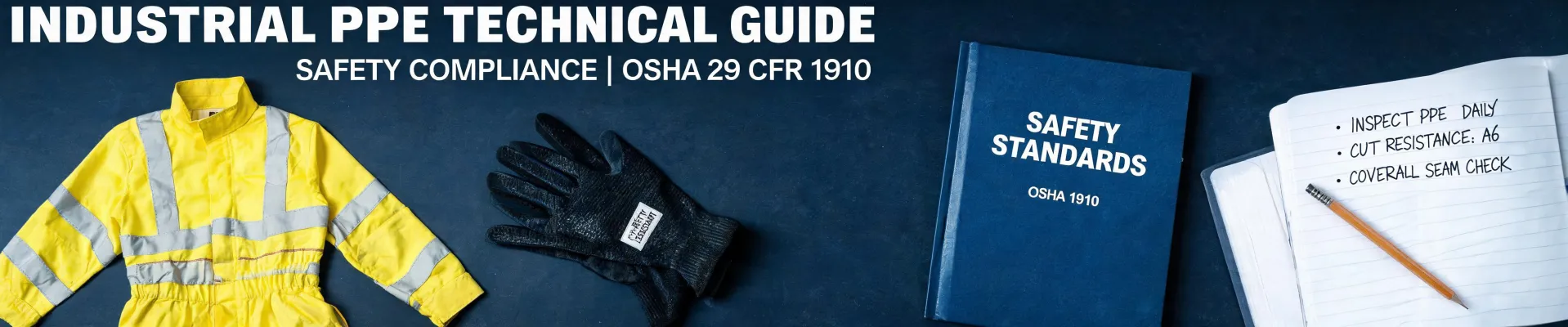
It was a Thursday morning in early March 2024 when I got the call. A site supervisor near Harrington Raceway & Casino needed 500 hard hats and 200 pairs of heat wave safety glasses—rush order, two-week deadline. The project was a new concourse expansion, and the client wanted everything branded with the Dupont logo. I logged into Dupont’s supplier portal to pull the specs, thinking: this should be straightforward.
I’ve been a quality and brand compliance manager for about four years now. I review every safety gear deliverable before it reaches customers—roughly 200 unique items annually. In Q1 2024 alone, I’ve already rejected 12% of first deliveries due to spec mismatches. So I’ve seen the pattern. But this one? It became one of those stories I tell new hires.
Background: The Project and the Order
The client was a mid-sized construction firm—not a regular Dupont buyer, but they’d heard about our Tyvek and Kevlar products. They needed hard hats (class E, full brim, with slot for earmuffs) and heat wave safety glasses (anti-fog, UV400, with a tint that could handle Delaware’s summer glare). They didn’t specify a particular standard—just said “meet OSHA requirements.” That’s always a red flag to me.
When I saw the purchase order come through, I flagged it immediately. The quantity, the timeline, the vagueness—it felt like a repeat of a situation from 2022, where a vendor sent us 8,000 units of gloves that failed cut resistance tests. That mistake cost us $22,000 in redo and delayed the client’s launch by three weeks. I wasn't gonna let that happen again.
The Inspection: Where the Trouble Started
Two weeks later, the shipment arrived. I did what I always do: pulled a random sample of 10 hard hats and 10 glasses from different pallets. The hard hats looked fine at first glance—yellow, smooth, with the Dupont logo stamped on. But when I checked the suspension system, something felt off. The webbing tension was inconsistent. Some had a gap between the shell and the headband that was way bigger than the 1-inch maximum allowed by ANSI Z89.1.
I measured it: 1.4 inches on three units. Normal tolerance is ±0.1 inch. The vendor claimed they were “within industry standard.” I wasn't buying it. I rejected the batch on the spot.
The glasses were another story. The heat wave safety glasses—supposed to be anti-fog and impact-rated—had a coating that was visibly uneven. Under a magnifying lamp, I could see streaks. I ran a quick drop test from 1 meter onto concrete. Two of the ten lenses cracked. That’s a fail against ANSI Z87.1 high-velocity impact requirements.
I called the supplier. The conversation went like this:
“We’ve been making hard hats for 15 years. Nobody’s ever complained.”
“Look, I understand. But my client’s workers will be under a structure that’s 50 feet high. A 3-pound object dropping from that height will hit hard. Your suspension gap reduces the impact protection by about 20%. I can’t sign off.”
The most frustrating part of this situation: the same issues recurring despite clear communication. You’d think written specs would prevent misunderstandings, but interpretation varies wildly. I was ready to drop that vendor entirely. But they had a one-week turnaround, and we were already behind schedule. So I negotiated a redo—their cost—with stricter in-process checks.
Educating the Client: The Real Value
Meanwhile, the client called, concerned about the delay. I explained what happened. The project manager—let’s call him Dave—said, “Can’t we just use them? They look fine to me.”
That’s when I switched to customer education mode. I spent 15 minutes walking him through the ANSI standards. I showed him photos of the gap, the cracked lenses. I explained that people think expensive PPE delivers better quality—but actually, vendors who deliver quality can charge more. The causation runs the other way. And when you buy cheap PPE without verifying specs, you’re not saving money—you’re risking injury, fines, and reputational damage.
Dave asked a question that surprised me: “Is PPE a current asset? We’re trying to classify it for our inventory.” I told him that for most construction firms, PPE is treated as a current asset—specifically, inventory or supplies—because it’s consumed within a year or less. “According to GAAP,” I said, “if it’s expected to be used within one operating cycle, it’s a current asset. Some companies expense it immediately. But the key is you need to account for it properly, especially if you’re audited.” He thanked me—said he’d never had a vendor explain that before.
The Redo and the Outcome
Three days later, the replacement shipment arrived. I inspected every single hard hat and every pair of glasses. All passed. The suspension system tension was consistent—within 0.05 inch. The lens coating was uniform. I ran the drop test again: zero failures. I signed off, and the gear was shipped to the site near Harrington Raceway & Casino on time.
There's something satisfying about a perfect redo after all the stress. The best part: Dave later sent me a note saying his team appreciated the lesson. “I’m gonna use your specs for all our future PPE orders,” he wrote. That’s the kind of result that makes my job worth it.
Lessons Learned (and Shared)
Here’s what I took away from this experience:
- Specs are not suggestions. If you don’t specify the standard (ANSI, CSA, etc.), you’ll get whatever the vendor considers “good enough.”
- Train your quality team to look for the subtle stuff. The gap, the coating—anyone can spot a cracked shell. The real differences are hidden in tolerances.
- Customer education is an investment. An informed customer asks better questions and makes faster decisions. That 15-minute call saved us from a potential injury lawsuit later.
- Don’t assume cheaper alternatives are equivalent. I’ve seen contractors buy “hard hats” from no-name brands that collapsed under a 40-pound load. The cost difference was $3 per unit. A ton of people think it’s all the same—it’s not.
I still work with that vendor today, but every contract now includes a clause requiring pre-shipment samples with measurement certificates. And I always log into the Dupont portal to verify the spec sheet before approving any new style. It’s a small step that’s saved us more times than I can count.
So next time you order hard hats or heat wave safety glasses, ask yourself: Do I really know what I’m buying? Or am I just trusting the price tag? The answer might save you a whole lot more than money.

Discuss this specification topic
Use the contact form if your team needs a standards crosswalk, datasheet request, or PPE program review related to this article.
Request Follow-Up