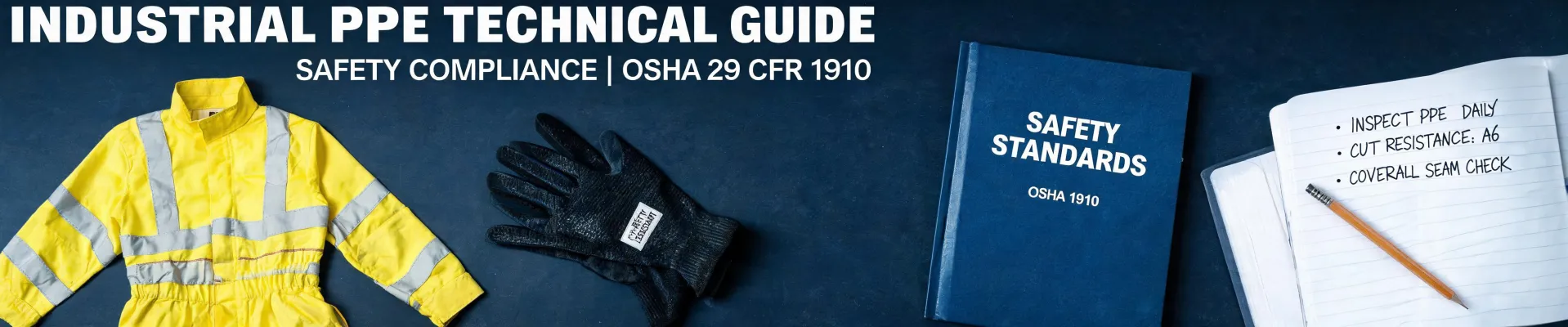
In March 2024, a hospital supply manager called at 9:40 AM. She needed 60 DuPont Tyvek coveralls, 30 pairs of Kevlar gloves, 50 safety glasses, 8 first aid kits, 2 boxes of N95 masks, and—I asked her to repeat it—a 6-foot baby fence. Normal lead time for that mix was six days. She had six hours.
I run emergency fulfillment at a B2B safety supply company, so rush orders are not new to me. I've handled 200+ of them in the last two years. This one stayed with me because it forced me to answer a question I normally answer by rote: what is PPE in healthcare, exactly?
The Call I Almost Dismissed
At first, the baby fence threw me. Why would a hospital need a baby fence? It wasn't in our PPE database. It wasn't even listed in the healthcare category in our ERP. I almost told her we didn't stock it and pivoted to the part of the order I understood.
Then she explained: the pediatric waiting room hadn't been finished, and contractors had left an open pathway from the waiting area to the phlebotomy station. A toddler could wander through a swinging door and find needles, cleaning chemicals, and a sharps container. The baby fence wasn't a weird accessory. It was an engineering control—a physical barrier between a child and a hazard.
I should add that I initially thought the same-day deadline was overkill. (Should mention: it wasn't.) The surveyor had flown in from the regional office. These visits get rescheduled rarely. Missing the window would have pushed the clinic opening back at least two weeks.
What PPE in Healthcare Actually Means
PPE stands for personal protective equipment. In healthcare, it's the gear worn to block exposure to blood, body fluids, respiratory droplets, and hazardous chemicals. The CDC's isolation precautions guidance, which I checked again in November 2024, still groups it into gloves, gowns, masks, respirators, eye protection, and face shields. For higher-risk situations—think aerosol-generating procedures on patients with undiagnosed respiratory illness—a fit-tested N95 or elastomeric respirator is the standard. And for certain infections or chemical exposures, a hooded coverall like DuPont Tyvek is the right tool.
But PPE is not the whole safety universe. That's easy to forget when you're selling it. A first aid kit is not PPE, though in a healthcare workplace it belongs right next to the PPE station. PPE protects the person while the hazard is still in play; a first aid kit is what you grab after a failure occurs. Both are necessary, but they are different layers in a layered system.
A DuPont water filter cartridge is another non-PPE item that belongs in the same mental model. On that order, the supply manager added one because the clinic's staff break room water source had failed a sediment test after a construction mishap. The water wasn't the reason they called. But if they'd opened a patient-facing clinic with cloudy water in the break room, the surveyor might have asked hard questions about water safety.
So when people ask what is PPE in healthcare, I now answer with an honest limitation: PPE is the wearable layer, but it only works if the people around it also think about isolation, sterilization, air flow, spills, barriers, and even baby fences.
How the Rush Order Actually Went Down
The process part wasn't glamorous. I broke the order into three categories:
- Immediate stock: first aid kits, safety glasses, Kevlar gloves, N95 masks. That was in our warehouse and ready by 10:30 AM.
- Regional warehouse: Tyvek coveralls. They could be trucked to our dock by 2 PM. We would repack and courier them to the hospital.
- The baby fence: no listing in our ERP. We had to call around.
The numbers said to use our standard distribution hub—it costs $115 per courier run and we've done it dozens of times. My gut said don't. It was a Tuesday in a city with two downtown events, and a 4 PM run could hit 90 minutes of traffic. I approved a $160 fee for an independent courier who could pick up from three locations. That decision made no sense if I looked only at the original cost. It made total sense if I looked at the cost of missing the 7 AM surveyor visit.
Here's where I almost got tripped up: the baby fence. I wanted to substitute a fully enclosed playard, but the hospital asked for a freestanding gate with a frame. A playard creates a supervised area for quiet play; a corralled walkway is not the same. I almost read the first half of the sentence and missed the second half. We eventually found a local commercial storage company that sold a 4-panel gate. The courier picked it up on the way to the hospital.
Delivered at 2:47 PM. Total extra cost: $345 (rush courier, gate, and a coffee for the charge nurse who helped unload). I want to say the total order value was close to $4,000, but don't quote me on that. The next morning, the supply manager texted: 'Surveyor passed.'
What a DuPont Safety Program Taught Me
You can't talk about a DuPont safety program without mentioning DuPont's Bradley Curve. This may surprise you: the real safety program isn't a checklist. It's a maturity curve that moves from people getting hurt because they're careless to a point where safety is so embedded that nobody mentions it anymore. In healthcare, you know a facility has moved along that curve when the nursing director asks for a baby fence before the construction crew finishes the waiting room.
PPE is a visible artifact of a DuPont-style safety program, but the program itself is the decision process: find the hazard, measure the risk, decide who needs protection, and verify the protection is actually used.
From our internal data of 200+ rush jobs in the last two years, the most expensive mistake isn't the rush fee. It's the assumption that the person ordering knows exactly what they need. Our best add-on service is asking what are you trying to stop from happening?—and then trying to stop it. Not that we get paid more for it.
The Part People Don't Talk About
If you're searching because you need to buy PPE for a small practice, here's a useful limitation: not all healthcare PPE is DuPont Tyvek. Tyvek shines in high-risk isolation, chemical splash, and procedures that demand a liquid and particulate barrier with some breathability. For standard contact precautions, a disposable isolation gown is probably fine. If you're buying Level A hazmat suits for a dermatology clinic, you're probably over-engineering the risk.
What about first aid kits? In a medical office, go with an ANSI Class B first aid kit. OSHA 29 CFR 1910.151(b) requires adequate first aid supplies in the workplace. Check the kit monthly, because packaging dries out and scissors disappear. A first aid kit that isn't inventoried is a decoration.
Baby fences? If you need one, make sure it is wall-mountable with a self-closing gate. There are no PPE standards for baby fences, but there are consumer safety standards for gates. Buy one that meets the current ASTM F1004 standard if you are in the US. This is the kind of detail nobody asks for in a title tag but matters during an inspection.
The DuPont water filter cartridge part also needs a caveat: I'm not a water treatment engineer. What I know is the hospital staff wanted a quick sediment reduction solution after a construction mishap, and a cartridge is only as good as its housing and maintenance schedule. Verify the application before buying, and don't let a filter be a substitute for flushing the line.
What I'd Keep, What I'd Change
This approach worked because the hospital was 14 miles away and the supplies were available within a 45-minute radius. If the same call came from a rural facility 300 miles away, my play would be different. Context matters more than any checklist.
I also want to be honest about what I'd change: I should have asked the supply manager the why question for each item on the order. She knew the baby fence was a construction barrier, but I almost skipped it. I now ask that question on every rush order, even when the answer seems obvious. It has caught three other misses since then, including a fire extinguisher that had nothing to do with PPE but absolutely had to be in the same delivery.
As of January 2025, this remains the best way I can explain what is PPE in healthcare: it is the wearable layer plus all the decisions around it. DuPont Tyvek coveralls and Kevlar gloves are on the surface. Underneath are first aid kits, filtered water, physical barriers, and a culture that takes the next inspection seriously before the inspector shows up.
You don't need the same-day rush if your safety program is already running. But if it's not, at least get the delivery on time.

Discuss this specification topic
Use the contact form if your team needs a standards crosswalk, datasheet request, or PPE program review related to this article.
Request Follow-Up