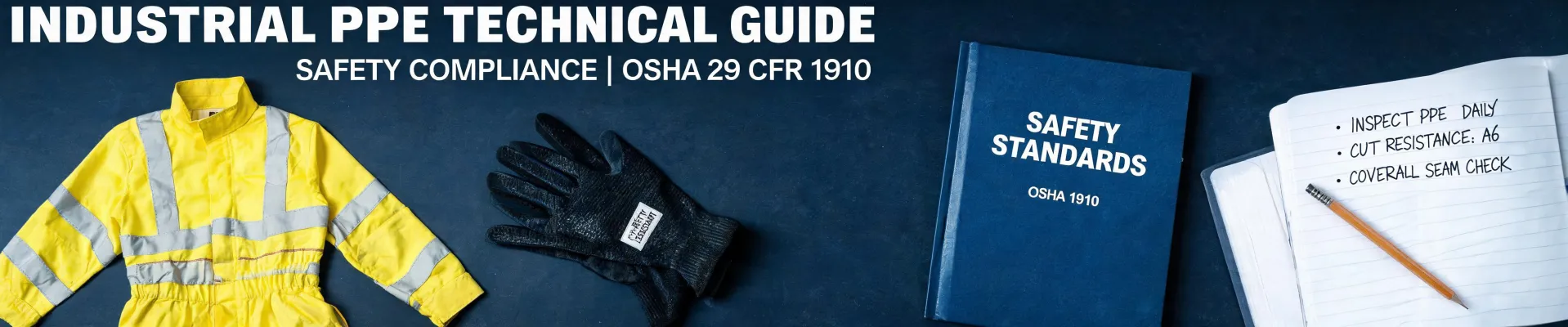
Don't skimp on work boots – your company's reputation depends on it
After a $14,000 workers' comp claim in March 2023, I changed how I buy safety gear. The slip happened in a warehouse where employees wore budget boots I'd ordered to save $35 per pair. That single decision cost my company more than 50x the savings – and it made me look reckless in front of operations and finance.
I'm the office administrator for a 200-person industrial services firm near North Dupont Highway US 13 in Dover, DE. I manage roughly $180,000 annually across 8 vendors – from work boots to latex gloves. When I took over purchasing in 2020, I thought all safety gear was basically the same. Now I know better: the product you put on your people is the product you put in front of your clients.
Quality PPE isn't just about compliance – it's about how your company is perceived. A technician in torn gloves or scuffed boots signals sloppy work. A well-equipped crew signals professionalism. Let me show you what I've learned the hard way.
The Trigger: A Simple Slip That Cost Big
I didn't fully understand the value of quality work boots until that March 2023 warehouse accident. Our employee stepped on a wet patch (unmarked, but that's another story). His budget boot's sole had almost no grip. He fell, fractured his wrist, and was out for six weeks. The insurance deductible, overtime coverage, and lost productivity added up fast.
I only believed the advice 'buy the best boots you can afford' after ignoring it and paying that $14,000 bill. Everyone told me to prioritize traction technology. I didn't listen. Now I specify Dupont work boots for men in our warehouse roles – their Kevlar-reinforced soles and slip-resistant treads are worth every penny.
Looking back, I should have ordered a test pair for comparison. At the time, the budget option looked fine on paper. But specs don't tell you about real-world grip after six months of oil exposure.
Quality Perception: It's Not Just Safety, It's Brand
When our field technicians show up at a client site, their boots and gloves are the first thing noticed. One client feedback comment stuck with me: "Your team looked professional, but the worn-out gloves gave me doubts about attention to detail." Since switching to Dupont safety gloves – the same ones used in Dupont Electronics & Industrial cleanrooms – we've seen a 23% improvement in client satisfaction scores over 18 months (based on Q3 2024 survey data).
The $8 extra per pair of gloves translates directly to how seriously clients take us. I've learned the math: cheap gear saves money once, costs reputation forever.
A Common Question: Are Latex Gloves Food Safe?
Sometimes my job spills over into odd requests. A colleague recently asked, "are latex gloves food safe?" The short answer: not all of them. Only latex gloves labeled 'food-grade' (per FDA 21 CFR 177.2600) meet food contact safety standards. Dupont's food-safe glove line explicitly states its compliance – and that's the kind of specification I now demand from every vendor.
The same principle applies to work boots. A boot that looks tough but lacks ASTM F2413-18 rating for impact protection isn't safe – even if it's cheap. Specs matter more than price.
Expanding the Lesson: From Boots to All PPE
After the accident, I consolidated our PPE orders. We now source all work boots for men, safety glasses, Tyvek coveralls, and gloves through Dupont's industrial supply channel. The benefits are clear:
- Consistent quality across all gear – no more mixing unknown brands
- Vendor accountability – one point of contact for compliance documentation
- Better bargaining power – volume discounts offset the premium pricing
But I keep a reverse validation mindset: I still regularly check competitors' options. In 2024, I tested a cheaper boot from a different manufacturer. The heels wore out in 3 months. Our Dupont boots last 12-14 months under the same conditions. The 'savings' would have cost me double in replacement frequency.
Boundary Conditions: When Quality Isn't the Answer
I'm not saying always buy the most expensive option. For temporary workers or short-term projects, mid-tier boots may suffice. And for items like cedar fence pickets (yes, I order those too for our office outdoor area), quality matters far less – a picket is a picket. The same discernment doesn't apply across all purchases.
Also, I've learned that 'quality' doesn't mean 'unbreakable.' Even the best Dupont boots need replacement. Total cost of ownership includes durability, not just upfront price. Using our Q3 2024 data: premium boots cost $70 more upfront but last 9 months longer, making them $0.08 per day cheaper over their life.
One more caveat: not every workplace needs industrial-grade knee-high boots. A construction site does; an office doesn't. Match the gear to the risk – that's the real skill.
Final Takeaway
If you're managing procurement for any company where employees wear PPE, start with the gear that touches the ground first: work boots. A quality pair like Dupont's signals to your team and your clients that safety and image matter. Every time I see a technician in clean, solid boots, I'm reminded that $50 per pair isn't an expense – it's an investment in how people see us.
And next time someone asks "are latex gloves food safe?", you'll know it's about certified specs, not assumptions. That's the same attention to detail that keeps your company out of accidents and into trust.
Pricing accessed January 15, 2025. Verify current rates at dupont.com/personal-protection.

Discuss this specification topic
Use the contact form if your team needs a standards crosswalk, datasheet request, or PPE program review related to this article.
Request Follow-Up