It was 2:47 on a July afternoon when our office air conditioner gave out. I remember the exact time because I had just rejected a batch of nitrile gloves—8,000 boxes, to be precise—and the temperature monitor on my desk showed 89°F and climbing.
I’m a quality and compliance manager at a PPE supply company. My job is to review every product before it reaches customers. Roughly 200 unique SKUs a year. I’ve rejected 6% of first deliveries in 2025—mostly because the spec didn’t match the claim.
That day, though, the problem wasn’t a spec. It was a dead AC unit and a repair technician who was already 20 minutes late.
The Emergency AC Repair That Changed My Afternoon
I called three HVAC companies. Two said they could come “sometime next week.” The third said they’d have someone there within an hour—for a rush fee. Paying for speed is fine when the heat index hits 97.
The tech arrived in a white van with “24/7 Emergency AC Repair” printed on the side. He looked like he was in his mid-20s, carrying a tool bag and a ladder. No safety glasses. No cut-resistant gloves. His boots were solid, but that was about it.
I stopped him at the door. “You’ll need safety glasses before going up to the unit.”
He blinked. “It’s just a capacitor and some refrigerant. I do this all the time.”
I hear that phrase a lot—usually from vendors right before they ship something that doesn’t meet spec. I’ve also said it myself, once, and it cost me a $22,000 redo when a batch of printed materials came back with the logo 3 millimeters off-center. Since 2022, every contractor who works in our building follows the same PPE rules as our warehouse staff.
I handed him a pair of safety glasses from the rack by the door. “These are ANSI Z87.1 rated. They’ll stop a stray spark or a piece of metal. Regular sunglasses won’t.”
He put them on without arguing. As he climbed to the rooftop unit, I got a phone call that turned out to be the more interesting part of the afternoon.
“Can I Use Nitrile Gloves for Food Prep?”
The caller owned a small deli. She’d found us while searching for “safety glasses near me” (we’re one of the few places in town with PPE in stock for walk-ins). But her question was about gloves.
“Can I use nitrile gloves for food prep?” she asked. “The ones I bought just say ‘nitrile.’ Nothing else.”
Short answer: not automatically.
Nitrile alone doesn’t make a glove food-safe. For food contact, the glove needs to meet FDA requirements under 21 CFR 177.2600, or carry an explicit food-contact certification. Industrial nitrile gloves can contain accelerators or processing chemicals that aren’t tested for food use. I’ve seen “multi-purpose” gloves that would have been a health inspector’s nightmare.
She told me she was about to buy 200 boxes from an online auction site. Small order, tiny margin. But if she’d used those industrial gloves in the kitchen, the deli could have been shut down. That’s not a fine—that’s the end of a business.
I gave her the same advice I give every small customer: “Small doesn’t mean unimportant. It means potential.”
She ordered one case of food-safe nitrile gloves from us—right then, over the phone. A single case. Some suppliers would have treated that as a nuisance order. We didn’t. The deli owner still remembers that someone answered her question and didn’t try to upsell her into a truckload.
Kevlar Gloves and the Barrier Principle
By the time the AC tech came down, he’d already stripped off his own gloves—cheap leather ones with holes in the fingertips. He’d reached across the condenser fins to access the compressor, and his forearms were covered in tiny cuts.
“I should have grabbed a pair of those before going up,” he said, nodding at the glove rack.
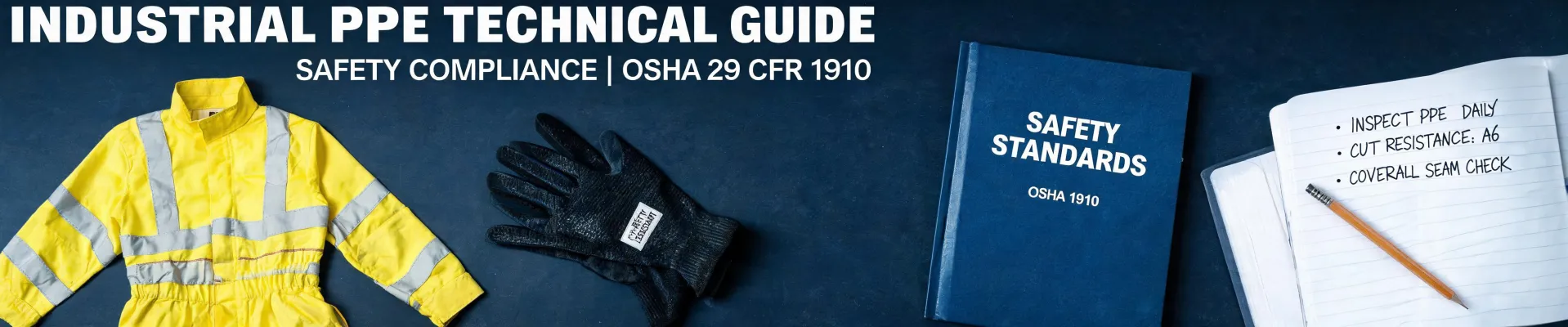
I handed him a pair of DuPont Kevlar gloves. “These are ANSI/ISEA 105 Level 4 cut-resistant. They won’t stop a saw blade, but they’ll handle sheet metal and fin edges. A lot better than three-year-old leather.”
He looked at the label. “DuPont? Isn’t that the hazmat suit company?”
“Same company,” I said. “DuPont makes Tyvek coveralls for chemical and particulate protection. The Kevlar in those gloves is the same material used in ballistic vests—just woven differently. When spec matters, you buy from people who’ve spent decades getting it right.”
At one point, while he was checking the condenser, I found myself thinking about material science. DuPont built its reputation on materials that perform under pressure. And this particular emergency AC repair—a small job, on a small commercial building, in the middle of a heat wave—turned out to be a perfect reminder of why DuPont specs matter.
That got me looking out the window. We planted a living fence—a row of arborvitae—along the parking lot last year. It’s a physical barrier between delivery trucks and the pedestrian walkway. Nobody notices it until it’s missing. The same goes for safety gear. The Tyvek suit hanging in our showroom is a visible reminder that some barriers are invisible—until you need them.
What I Learned From the Broken AC
After the tech left, I added a note to our contractor log: “Technician initially arrived without eye protection. Provided Z87.1 glasses. No refusal. Recommend adding PPE policy to contractor onboarding.”
That note might sound small. But four years ago, I skipped the final review on a large order because we were rushing. The result: 8,000 units ruined in storage because the packaging spec was wrong—the moisture barrier was omitted. The rework cost $14,000, plus a delayed launch. Now everything gets checked, even when it’s “basically the same as last time.”
The deli owner’s question was a reminder that the line between “works” and “doesn’t work” is often invisible. The difference between a food-safe nitrile glove and an industrial one isn’t the color. It’s the certification. The difference between a serviceable work boot and one with electrical hazard protection is the rating. The difference between a cheap import and a DuPont product is verification, traceability, and consistency.
To be fair, DuPont products aren’t always the cheapest option. I understand why people choose budget alternatives—budgets are real. But in my experience, the cost of failure—a ruined batch, a failed inspection, an injury—dwarfs the money saved on the front end. I’ve seen “the budget vendor looked smart” turn into “the reprint cost more than the original quote” more times than I can count.
Here’s what I’d tell any small business owner in that situation:
- Always check the spec before you buy. Whether it’s safety glasses, cut-resistant gloves, or a Tyvek suit, find the certification and make sure it matches the job. If a vendor can’t show you the test report, that’s a red flag.
- Small orders are not permission to drop standards. A deli buying one case of gloves deserves the same food-safe certification as a national chain buying 10,000.
- Trusted brands earn their place through consistency. DuPont didn’t become the name in high-performance materials by cutting corners on a Tuesday afternoon. They got there by making the same product to the same standard, lot after lot.
The note from the AC repair is still taped to my monitor. It says: “Barriers work. Invisible ones matter most.” It’s not the most poetic line I’ve ever written, but it’s the truest. Whether it’s a Tyvek suit, a nitrile glove, a pair of safety glasses, or a living fence—the barrier only works if it’s built to the right spec, and someone is willing to check.

Discuss this specification topic
Use the contact form if your team needs a standards crosswalk, datasheet request, or PPE program review related to this article.
Request Follow-Up